
A construction coordinator keeps a project’s schedule, paperwork, and communication moving between the contractor, subcontractors, and clients, without carrying the same sign-off authority as a project manager. For Canadian contractors juggling several jobs at once, a remote construction coordinator can take on most of that coordination work without adding a full-time hire, and without anyone having to be physically in an office to do it.
Key Takeaways
- A construction coordinator handles scheduling, documentation, and communication between everyone involved in a project, rather than directing the work itself or making final calls.
- The role sits below a project manager or construction manager in scope, focused on keeping information moving between everyone who needs it.
- Typical coordinator duties include tracking schedules, maintaining change orders and permits, following up with contractors and suppliers, and reporting progress.
- A remote construction coordinator can take on most of this work without being physically on-site, since it runs mostly through phone, email, and shared software.
- Coordination work is well-suited to delegation because it’s process-driven and repeatable across projects, rather than reinvented for each new job.
- The right setup depends on how many active projects are running and how much of the coordination currently sits with one already-stretched person.
What a Construction Coordinator Actually Does
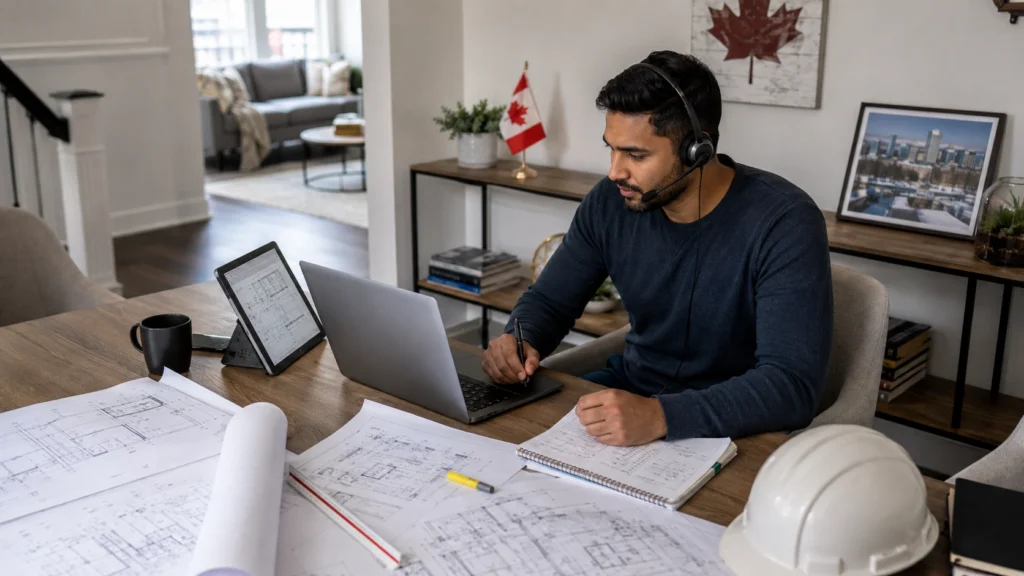
A coordinator is the person keeping everyone on the same page. On a typical job, that means tracking the schedule against milestones, maintaining contracts, change orders, and permits, and following up with contractors, suppliers, and clients so nothing stalls waiting on a reply. The role is administrative and communication-heavy rather than hands-on.
- Scheduling and milestone tracking against the project plan
- Documentation: contracts, change orders, permits, and RFIs
- Stakeholder communication between contractors, architects, and clients
- Progress monitoring and status reporting
- Materials and supplier order tracking
- Budget tracking support, working from numbers set elsewhere
It’s worth separating this from two roles it often gets confused with. A project manager owns the budget, schedule, and final decisions; a coordinator supports that with the admin work behind it. A site superintendent runs day-to-day activity and safety on-site; a coordinator’s work happens mostly by phone, email, and shared documents, which is exactly why it translates well to a remote setup.
Picture a contractor running two residential builds and a small commercial renovation at once. Someone needs to know which permit is still pending on which job, which subcontractor hasn’t confirmed next week’s start date, and which change order is sitting in an inbox unanswered. That’s coordination work, and without a dedicated owner, it tends to fall on whoever happens to check their email first.
Which Coordinator Tasks a Remote VA Can Handle
Most of the day-to-day coordination workload is a good fit for construction coordinator VA support, including:
- Schedule tracking and updates, flagging anything falling behind milestone dates before it affects the next trade in line.
- Documentation management, keeping contracts, change orders, and permits organized, current, and easy to locate when someone asks.
- Contractor and subcontractor follow-up on outstanding items, deadlines, and confirmations for upcoming site visits.
- Supplier and material order tracking, including chasing delayed deliveries before they hold up a crew on-site.
- Progress reporting to the project manager or owner on a regular cadence, rather than only when something goes wrong.
- Meeting notes and action item tracking, so decisions made on a call don’t quietly disappear afterward.
- RFI logging and follow-up until each one is answered and closed out, not just filed and forgotten.
- Client update communications on where a project stands, written in plain language rather than internal shorthand.
- Document organization and filing across active and closed projects, so past project records stay findable.
- Vendor and contract renewal tracking, keeping standing agreements current so nothing lapses without notice.
- Site visit and inspection scheduling, coordinating access for inspectors, engineers, or the client.
- New project onboarding, setting up the file structure and initial schedule as soon as a contract is signed.
The budget tracking side of this usually overlaps with construction financial back-office services, since the two tend to be requested together once a contractor starts delegating. A coordinator tracking costs against a schedule and a bookkeeper reconciling those same numbers usually work off the same job files, which is part of why contractors often bring both on around the same time.
Construction Coordinator vs. Construction Superintendent
These two roles get mixed up often enough, especially by contractors hiring for the first time, that it’s worth putting them side by side.
| Factor | Construction Coordinator | Construction Superintendent |
| Primary focus | Scheduling, documentation, communication | Day-to-day site supervision and safety |
| Typical location | Office or remote | On-site |
| Reports to | Project manager | Project manager or owner |
| Core tools | Scheduling software, document trackers, email | Site logs, safety checklists, crew management |
The overlap between coordinator and superintendent is why the two often work in tandem: one keeps the paperwork and communication moving, the other keeps the site running. Some contractors also compare this to project administrator support models, which sit closer to the coordinator side of that split than the superintendent side.
A general contractor with one superintendent per site and one coordinator covering three or four sites is a common setup, since coordination work doesn’t require a physical presence the way site supervision does. That’s also why it’s usually the easier of the two roles to delegate remotely.
What a Remote Coordinator Doesn’t Replace
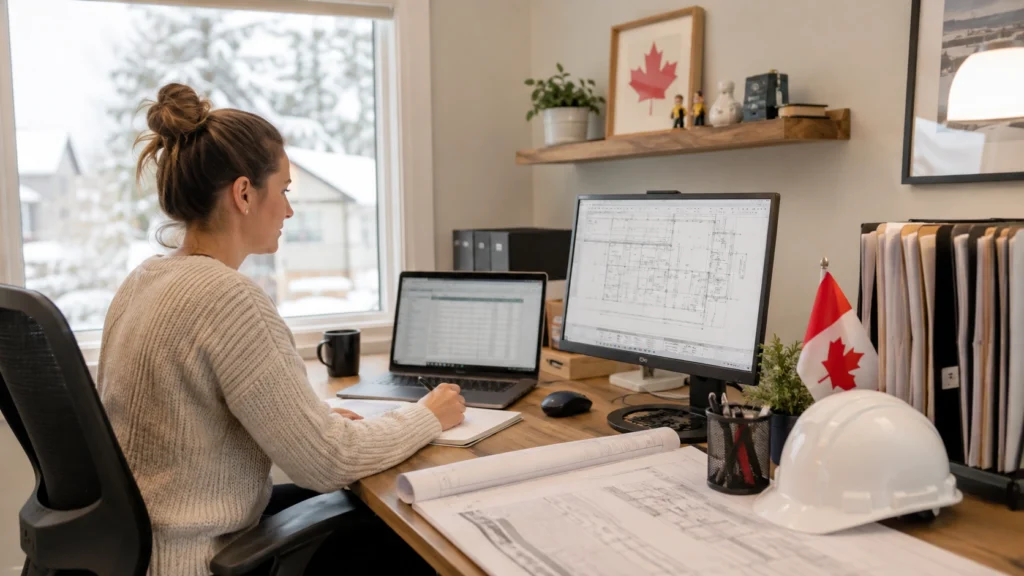
Site supervision, safety oversight, and hands-on direction of the crew stay with whoever’s physically on-site, since none of that transfers to a remote role. The same goes for final decisions on budget or schedule changes, which stay with the project manager or owner. What virtual support for Canadian contractors is built around is the coordination layer underneath those decisions, not the decisions themselves.
In practice, that split works well because the two sides rarely compete for the same hours. Site supervision happens on-site during the day; scheduling updates, documentation, and follow-up calls can happen in parallel without either side waiting on the other.
A useful way to think about it: if a task requires being physically present to make a judgment call, it stays local. If it requires organizing information that already exists, it’s usually a good candidate for a remote coordinator.
Where to Start With a Remote Coordinator
- Start with schedule tracking and documentation, the two tasks with the most repetition and the least judgment required.
- Keep using the same project management or scheduling software already in place, rather than switching systems mid-handoff.
- Set a short weekly check-in to review what’s outstanding across active projects, at least until a rhythm is established.
- Give the coordinator direct contact with subcontractors and suppliers early on, rather than routing everything through one person first.
Contractors who delegate coordination often look next at the Canadian document control process, since RFIs, submittals, and change orders tend to run through the same person handling the schedule.
The transition is usually smoother than contractors expect, mostly because coordination work is already documented somewhere, in a scheduling tool, an inbox, or a shared drive. The job is less about building something new and more about taking over what already exists, learning the shorthand a contractor already uses, and keeping it running the same way it always has.
Things to Know
- A construction coordinator supports the project manager rather than replacing their authority over budget and schedule decisions.
- The National Occupational Classification groups construction coordinators under the same broad category as construction managers, reflecting how closely the two roles work together.
- Most coordinator tasks happen by phone, email, and shared software, which is why the role translates well to remote work.
- Site supervision and safety oversight stay with whoever’s physically on the job, coordinator or superintendent.
- Coordination work tends to be repeatable across projects, which makes it easier to delegate than judgment-heavy tasks.
- A remote coordinator works inside whatever scheduling and documentation tools the contractor already uses.
- Starting with one or two projects is usually easier than handing over coordination for an entire portfolio at once.
- Progress reporting works best on a fixed schedule, weekly or biweekly, rather than only when the project manager asks for an update.
Frequently Asked Questions
What does a construction coordinator do day to day?
A construction coordinator tracks schedules, maintains project documentation, and follows up with contractors, suppliers, and clients to keep information moving.
The role is less about directing the work on-site and more about making sure everyone involved has what they need, when they need it, before a missing document or an unanswered question turns into a delay. On a busy day that might mean a dozen small check-ins rather than one big task.
Is a construction coordinator the same as a project manager?
No, a coordinator generally supports the project manager rather than replacing their role.
A project manager owns the budget, schedule, and final decisions, while a coordinator handles the administrative and communication work that keeps those decisions informed and on track. The two roles usually work closely together on the same project, with the coordinator feeding the project manager the information needed to make those calls.
Can a remote coordinator really work if they’re not physically on-site?
Yes, for the scheduling, documentation, and communication side of the role, since most of that work happens by phone, email, and shared software rather than in person.
What stays on-site is direct supervision of the crew and any safety-critical decisions, which is a different part of the project than what a coordinator typically owns, and the two rarely overlap on the same hours of the day. That separation is exactly what makes the remote model work in practice.
What tools does a construction coordinator use?
Most coordinators work inside whatever scheduling and project management software the contractor already uses, along with email and shared document storage.
A remote coordinator fits into that same setup rather than requiring the business to adopt new tools or retrain anyone on a different system, which is usually what makes the transition faster than contractors expect. It also means historical project data stays exactly where it already lives.
How is a coordinator different from a construction superintendent?
A superintendent manages day-to-day activity on-site, including crew supervision and safety compliance, while a coordinator focuses on scheduling, documentation, and communication.
Much of the coordinator’s work can be done remotely, and the two roles often work closely together but cover different parts of the same project, rarely competing for the same hours in a day. Understanding that split makes it easier to decide what to delegate and what to keep local.
One Point of Contact Instead of a Dozen Loose Threads
Coordination work doesn’t disappear just because no one’s assigned to it, it just moves onto whoever’s already busiest. A remote construction coordinator gives that work a single, dedicated owner instead of leaving it scattered across a project manager’s inbox and a contractor’s voicemail. It doesn’t need to start with the whole role at once. Reach out to see which parts of coordination make sense to hand off first.